
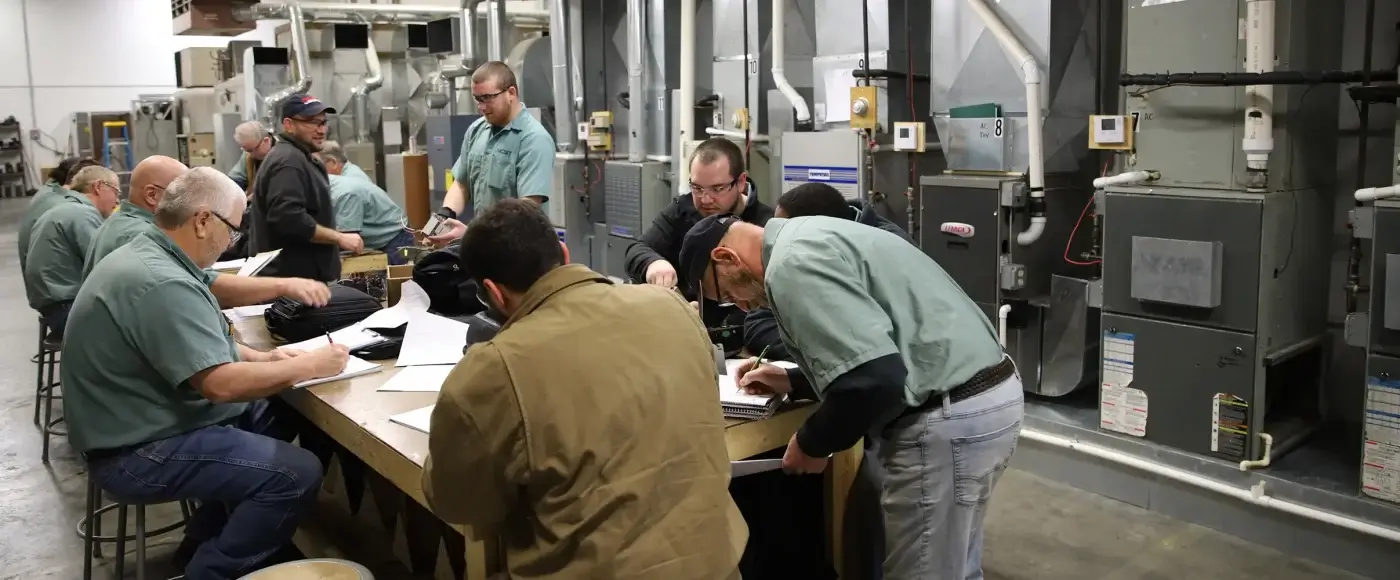
Trade school requirements are more straightforward than most people expect, and the admissions process itself works differently than a four-year college. Most programs use rolling admissions, so a qualified applicant can move from application to first day of class in a matter of weeks rather than waiting for a single deadline each year. Most programs ask for a high school diploma or GED, a completed application, and a passing score on an entrance assessment. Program-specific requirements, such as a driver’s license for commercial truck driving training, may apply depending on the field. This guide breaks down what applicants need, in what order, so anyone considering trade school can plan the next step with confidence.
Basic Requirements to Enroll in Trade School
Requirements differ from school to school, but most vocational and trade programs share a common set of baseline requirements.
Age and Education
Most trade schools require applicants to be at least 18 years old, though some accept 16- and 17-year-olds with parental consent or dual-enrollment agreements. A high school diploma or GED is required at nearly every trade school, though applicants without one may still qualify through a federal option called Ability to Benefit, which is worth confirming directly with an admissions office. Schools use the diploma or GED requirement to confirm applicants have the reading, writing, and math skills needed for technical coursework. Age rules can also depend on state law. In Pennsylvania, for example, state child labor rules limit the hours and jobs available to workers under 18, which can affect scheduling for younger applicants.
Entrance Assessment
Many trade schools require applicants to pass an entrance evaluation before enrolling. This test measures basic reading, math, and mechanical reasoning skills. The goal is not to filter people out, but to place them into coursework where they can succeed. Programs with heavier math content, such as machinist and CNC manufacturing, may add a separate math placement test.
Application and Interview
A completed enrollment application is required, and most schools also conduct a personal interview with an admissions representative. This conversation typically covers career goals, program details, and school policies. It is not designed to be intimidating. It helps confirm the program is a good fit before an applicant commits time and money.
Documents to Gather
Having these documents ready ahead of time can speed up the enrollment process:
- Government-issued photo ID
- Social Security card
- High school diploma or GED certificate, or an official transcript
- Driver’s license and driving record, for driving-related programs
- Proof of residency
Applicants planning to use financial aid should also gather tax documents and, for veterans, a DD-214 or Certificate of Eligibility.
Step-by-Step: How to Get Started at Trade School
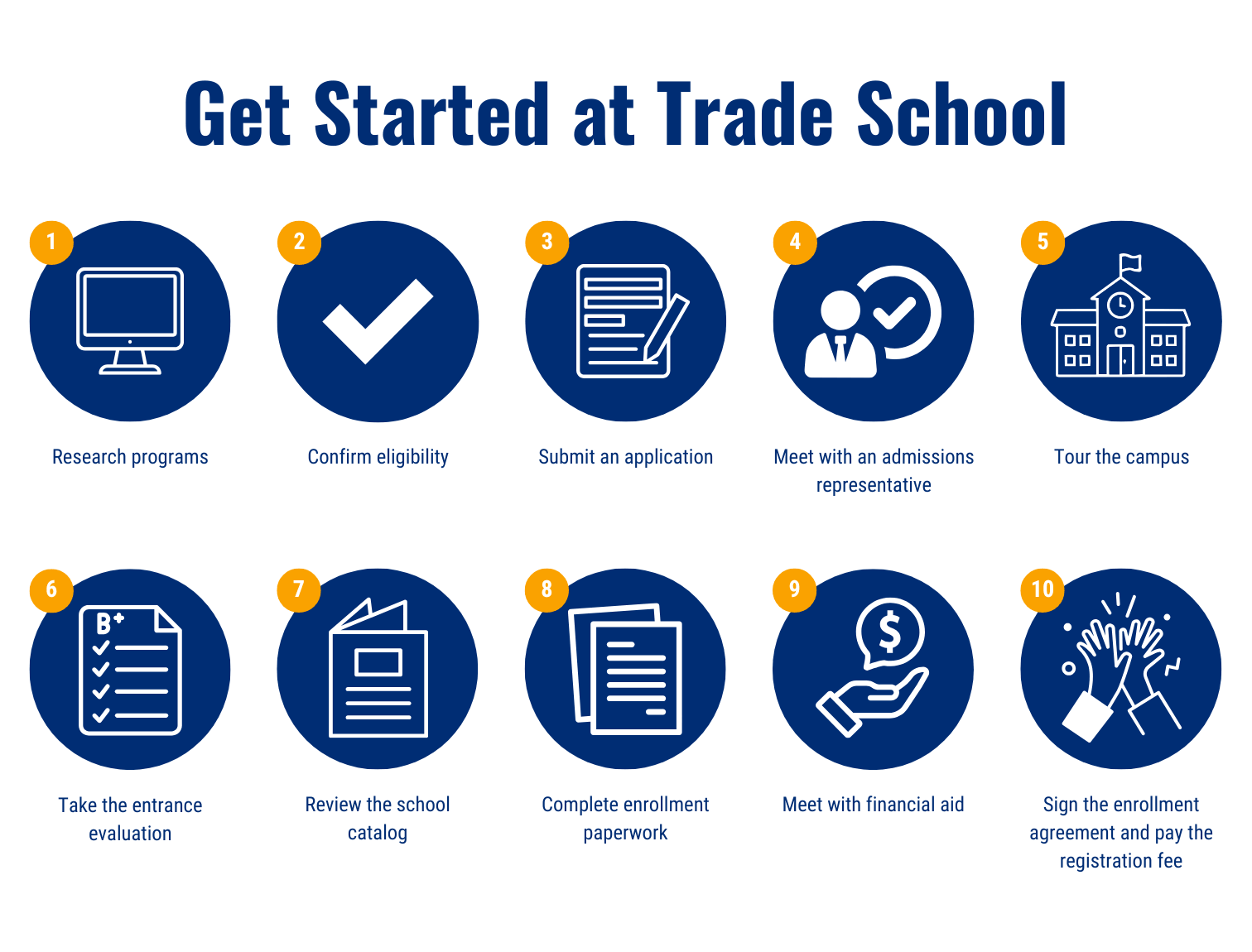
Once someone decides trade school is the right path, the process to enroll usually follows a similar sequence:
- Research programs. Compare available trades, program lengths, and campus locations against personal interests and career goals.
- Confirm eligibility. Check the age, education, and any program-specific requirements, such as a driver’s license for CDL training, before applying.
- Submit an application. Complete an enrollment information sheet or online application.
- Meet with an admissions representative. Most schools schedule an interview to discuss goals and answer questions about the program.
- Tour the campus. A campus visit lets applicants see the labs, equipment, and classrooms they will be using.
- Take the entrance evaluation. This confirms readiness for coursework and may determine program placement.
- Review the school catalog. This document outlines tuition, policies, program length, and graduation requirements.
- Complete enrollment paperwork. This includes the formal application, any required waivers, and program-specific forms.
- Meet with financial aid. A financial aid representative can review payment options, grants, and loan eligibility.
- Sign the enrollment agreement and pay the registration fee. This finalizes enrollment and secures a seat in the next available class.
The exact order can vary by school, but this sequence covers the core steps needed to move from interested to enrolled. Because most programs run on rolling admissions rather than a single enrollment period each year, this whole process can often be completed in a matter of weeks.
Requirements That Vary by Program
Beyond the basic requirements, many trade school programs have additional qualifications tied to the specific skills being taught.
Commercial Truck Driving and CDL Programs
Programs that prepare students for a Commercial Driver’s License have requirements beyond the standard entrance criteria. Applicants typically need:
- A valid driver’s license
- A CDL learner’s permit, often obtained during the program or as a prerequisite
- An acceptable driving record
- A DOT physical exam to confirm medical fitness to operate a commercial vehicle
Because trucking is a regulated industry, these requirements exist to meet federal and state licensing standards, not just school policy. The DOT exam is scheduled with a certified medical examiner and checks vision, hearing, and overall health against federal standards for commercial drivers. Appointment openings vary by area, so it helps to book this exam early rather than waiting until the last week before enrollment.
Mechanical and Technical Trades
Programs like automotive technology, diesel and heavy equipment repair, electrical, HVAC, and welding often call for physical stamina, since coursework involves standing, lifting, and hands-on lab work for extended periods. Some schools may ask applicants to confirm they can meet these physical demands.
Programs With Math-Heavy Curriculum
Fields like machining, CNC manufacturing, and industrial electro-mechanical technology may require a math placement assessment in addition to the general entrance test, since these trades rely on measurements, tolerances, and technical calculations.
Check the School’s Accreditation
Accreditation is worth confirming before enrolling anywhere, not just as a formality. It determines whether a school is eligible to offer federal financial aid, and it signals that a program meets outside quality standards. Prospective students can also review a school’s published completion and job placement rates, which give a clearer picture of outcomes than any marketing claim. New Castle School of Trades’ accreditation and job placement results are both published online for exactly this reason.
Frequently Asked Questions
Does trade school require a high school diploma or GED?
Yes, for most programs. A GED is treated the same as a diploma for admissions purposes at nearly every trade school.
What if an applicant doesn’t have a diploma or GED?
The Ability to Benefit provision may still allow enrollment and access to federal aid, depending on the school and program. This requires a direct conversation with admissions.
Is there a minimum age to attend trade school?
Most programs require applicants to be at least 18, though some accept 16- or 17-year-olds with parental consent, subject to state labor law.
Is trade school competitive to get into?
No. Most programs use rolling admissions and enroll qualified applicants as seats open, rather than ranking applicants against each other.
Do applicants need to take a test to get into trade school?
Yes. Most schools require an entrance evaluation to assess basic reading, math, and reasoning skills before placement.
Is a driver’s license required for trade school?
Only for driving-related programs, such as CDL training, which also require a CDL permit, a clean driving record, and a DOT medical exam.
Does accreditation matter when choosing a trade school?
Yes. Accreditation determines whether a school can offer federal financial aid and is a sign the program meets outside quality standards.
How much does trade school cost?
Cost varies by program length and field, but financial aid, scholarships, and payment plans are commonly available to help cover tuition.
Do trade schools require work experience?
No. Most trade school programs are designed for entry-level students and do not require prior experience in the field.
How long does trade school take to complete?
Program length ranges from a few weeks for short-term training, like CDL programs, to around 60 weeks for associate degree-level programs. How Long Does Trade School Take covers typical timelines by trade in detail.
Getting Started
Understanding these requirements is the first step. From there, the best way to get specific answers is to speak with an admissions representative directly. New Castle School of Trades’ admissions process walks applicants through each of these steps, from the entrance evaluation to financial aid, for programs at its New Castle, PA and East Liverpool, OH campuses.