
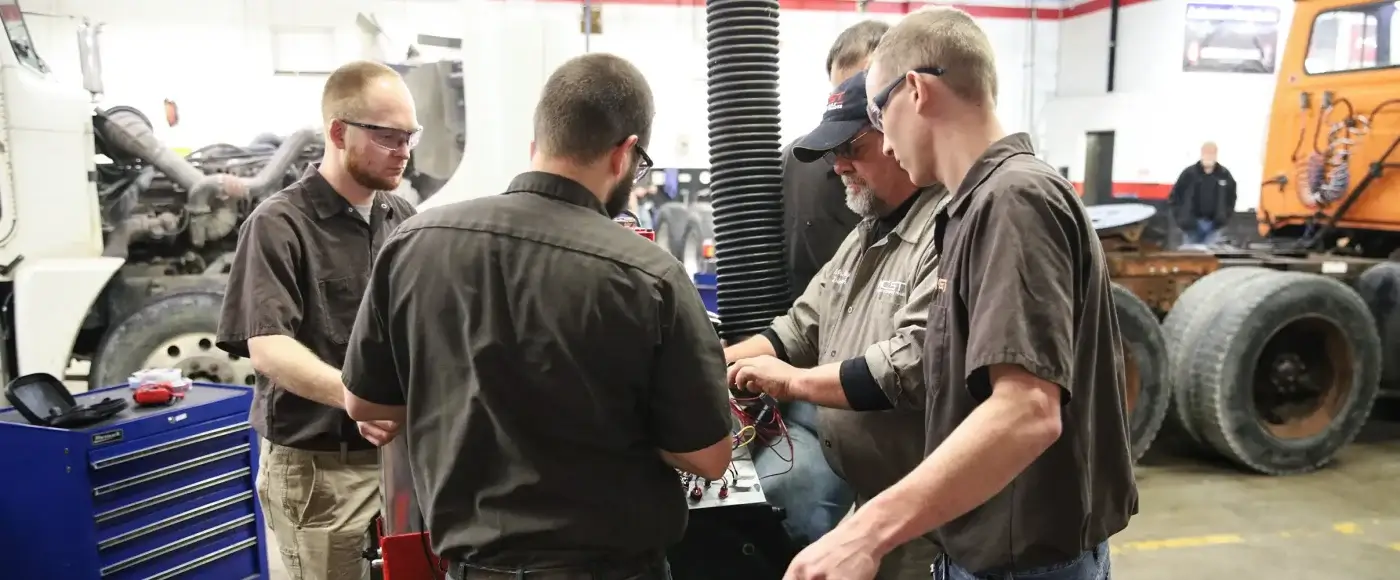
Trade school programs are a practical path for people who want to start working quickly and avoid heavy college debt. Instead of general education requirements, students spend most of their time learning the tools, equipment, and processes used on the job. Programs are typically shorter than a traditional college setting and graduates step directly into fields such as:
- Construction
- Transportation
- Manufacturing
- Equipment repair
All areas where the Bureau of Labor Statistics expects steady to strong demand through 2034.
Key Takeaways
- Trade school programs teach job-ready skills in fields like electrical, HVAC, welding, diesel and automotive repair, machining, heavy equipment, motorcycle repair, construction, and commercial truck driving.
- Most programs run 30 to 60 weeks and combine classroom instruction with hands-on shop time, so graduates enter the workforce in under a year in most cases.
- Every field covered here has a median wage tracked by the Bureau of Labor Statistics, ranging from about $48,000 to $63,000 a year as of May 2024.
- Industry certifications, like ASE, NATE, and AWS credentials, can increase job options and pay beyond what the base program provides.
- “Soft skills” like communication and time management, along with a path from apprentice to journeyman to business owner, are what turn a starting wage into a long-term career.
Why Trade School Focuses on Job-Ready Skills
Trade schools are educational institutions that teach technical skills and practical knowledge for a specific career, rather than a broad academic curriculum. A welding student spends most of their time with a torch in hand, developing technique through repetition. A traditional college student in the same field might write research papers about welding theory before ever picking one up. This hands-on approach benefits people who learn better by doing than by reading. Trade school instructors often come directly from industry positions, bringing current field experience into the classroom instead of an academic background.
How Trade School Programs Are Structured
Program length is shorter than a traditional degree because coursework focuses only on the skills a specific career requires. A typical program moves through four stages:
- Safety protocols and shop procedures
- Core technical skills for the trade
- Advanced techniques and current technology
- Certification preparation and job readiness
This structure is also why program length varies so much by trade. A commercial truck driving program can finish in a matter of weeks, while an associate-degree-level program in a field like automotive or electrical technology runs closer to 60 weeks.
Growing Demand for Skilled Trades
The job market shows strong, measurable demand for skilled trade workers. As experienced tradespeople retire, employers need new workers to fill roles in construction, manufacturing, transportation, and equipment repair. The Bureau of Labor Statistics expects about 649,300 openings a year across construction and extraction occupations alone through 2034, and demand is outpacing the pipeline of new workers in some fields.
Construction labor is a clear example: McKinsey research found that for construction laborer and helper roles alone, yearly program completions (3,400) run far below expected annual job openings (151,000). Several factors are driving the gap: infrastructure renewal projects, more specialized manufacturing technology, and steady residential construction and maintenance needs for electrical and HVAC services. For a full look at how the trades stack up against a four-year degree on jobs and pay, see trade school vs. college.
Programs and What You’ll Learn
Wage and job outlook figures below come from the Bureau of Labor Statistics Occupational Outlook Handbook (May 2024 wage data, 2024-2034 projections), the most current federal data available for each occupation.
Electrical Technology
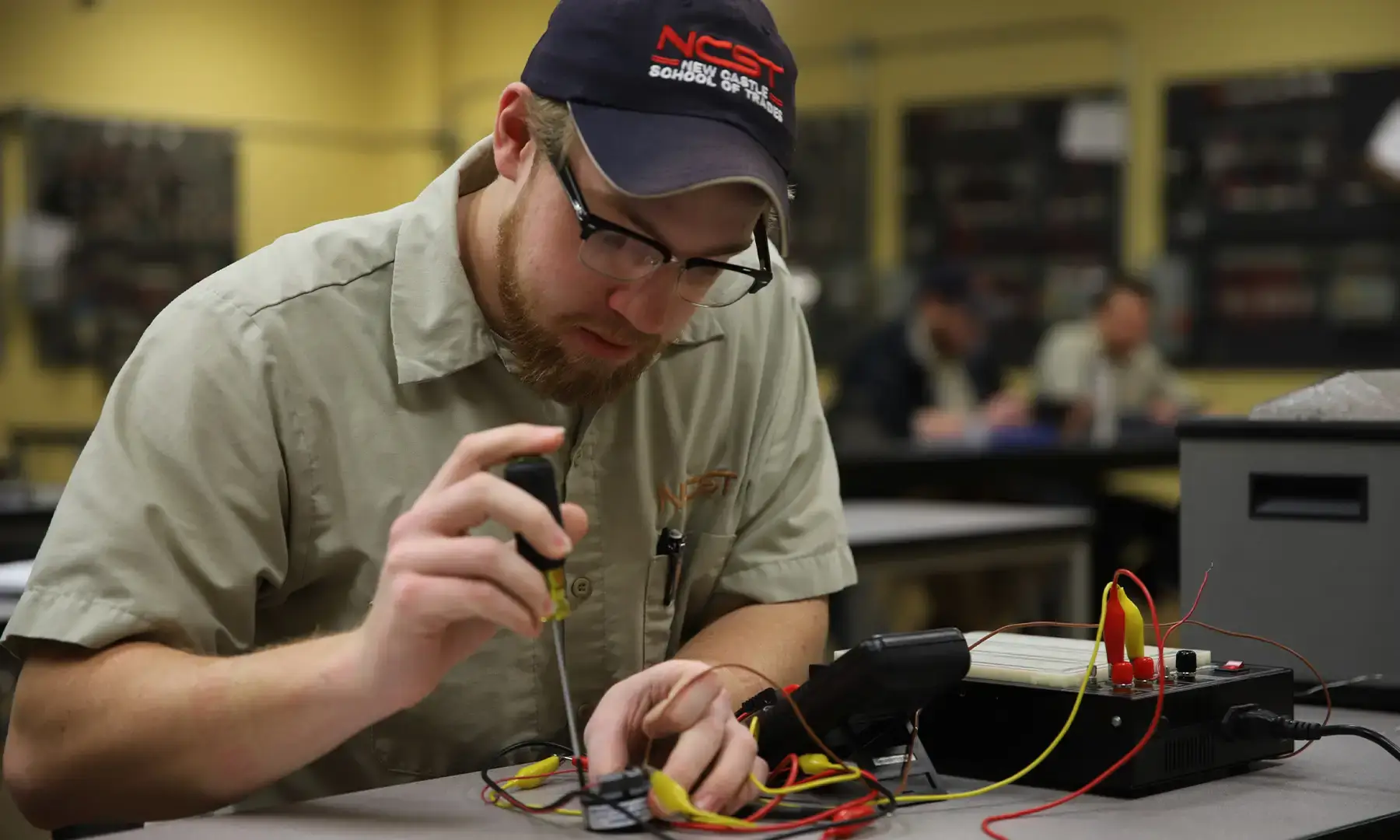
Students learn wiring, circuit theory, troubleshooting, and code-compliant installation to work on residential, commercial, and industrial electrical systems. The Electrical Technology program runs about 60 weeks and leads to an associate degree. Electricians earned a median wage of $62,350 in May 2024. The Bureau of Labor Statistics expects 9% employment growth through 2034, with about 81,000 openings a year, among the strongest outlooks of any trade covered here.
HVAC / Refrigeration & A/C Technology
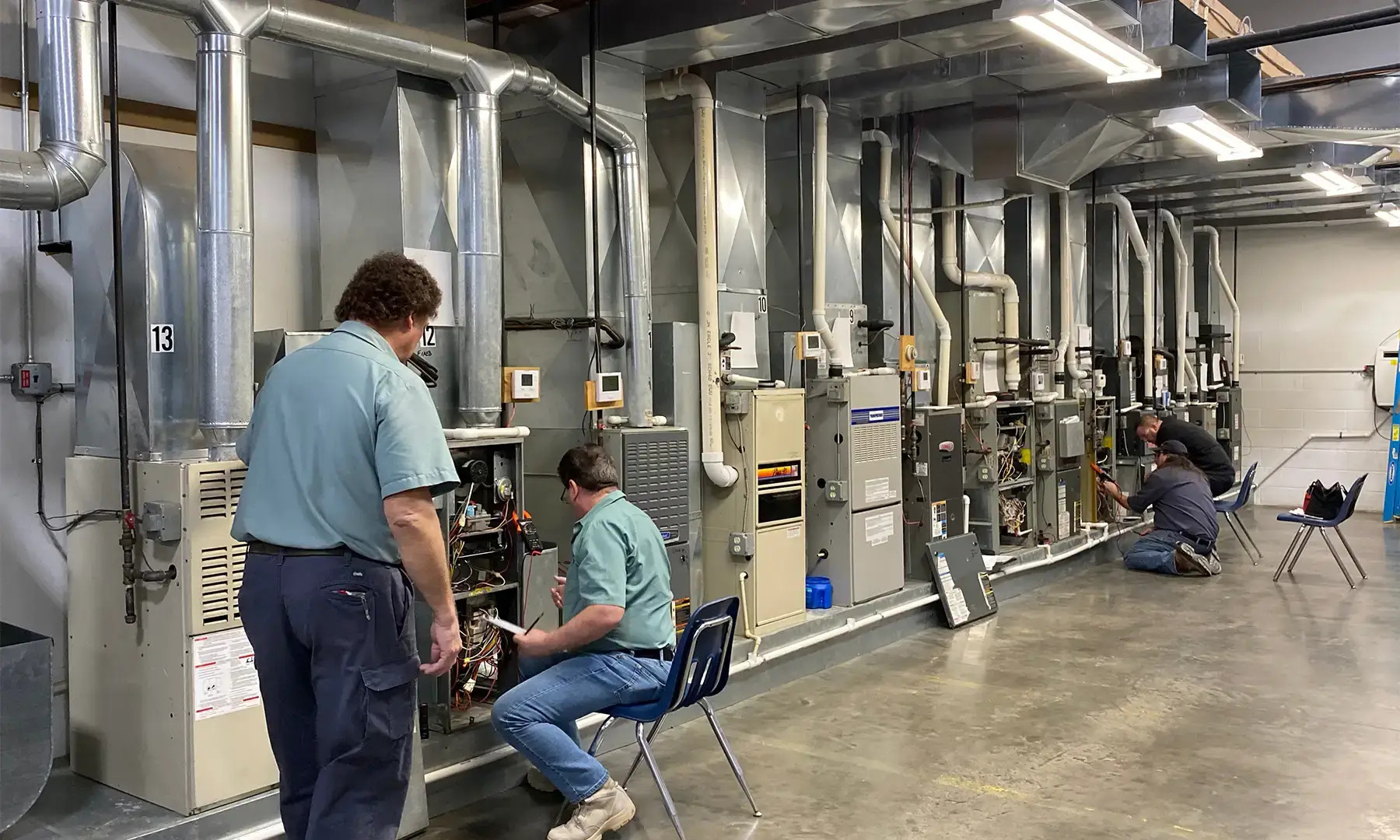
This program teaches installation, diagnostics, and repair of heating, cooling, and refrigeration systems, including electrical fundamentals that support the equipment. The Refrigeration & A/C Technology program runs about 60 weeks. HVAC/R mechanics and installers earned a median wage of $59,810 in May 2024. Growth is expected at 8% through 2034, classified by BLS as “much faster than average,” with about 40,100 openings a year.
Combination Welding
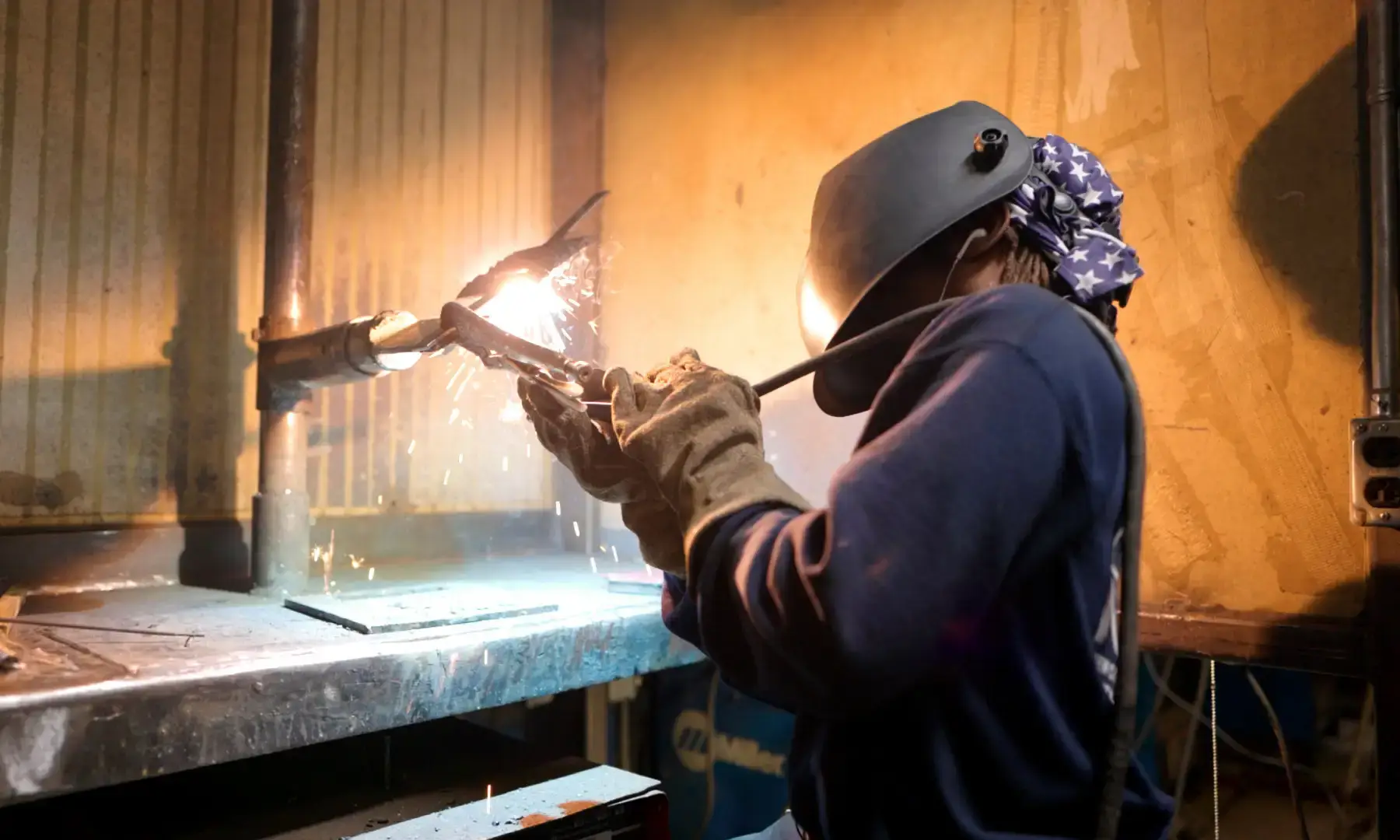
Students train in MIG, TIG, and stick welding, working across metals and joint types used in construction, manufacturing, and repair. The Combination Welding program runs about 50 weeks. Welders, cutters, solderers, and brazers earned a median wage of $51,000 in May 2024. Employment is expected to grow a modest 2% through 2034, but about 45,600 openings a year are still expected, mostly to replace retiring workers.
Diesel & Heavy Equipment Repair Technology
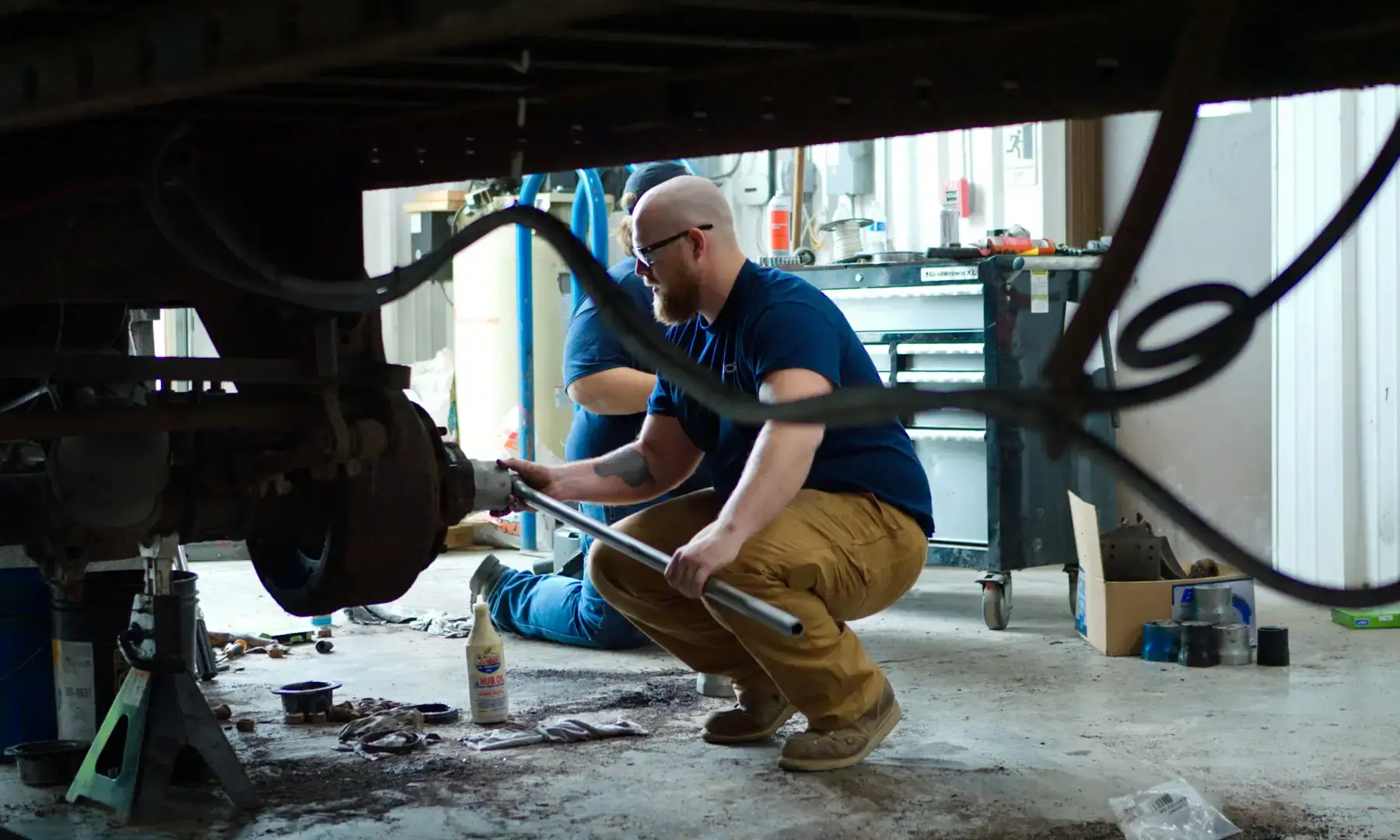
This program prepares students to diagnose and repair diesel engines and the heavy machinery used in trucking, construction, and transportation. The Diesel & Heavy Equipment Repair Technology program runs about 60 weeks. Diesel service technicians and mechanics earned a median wage of $60,640 in May 2024. Growth is expected at 2%, with about 26,500 openings a year.
Automotive Technology
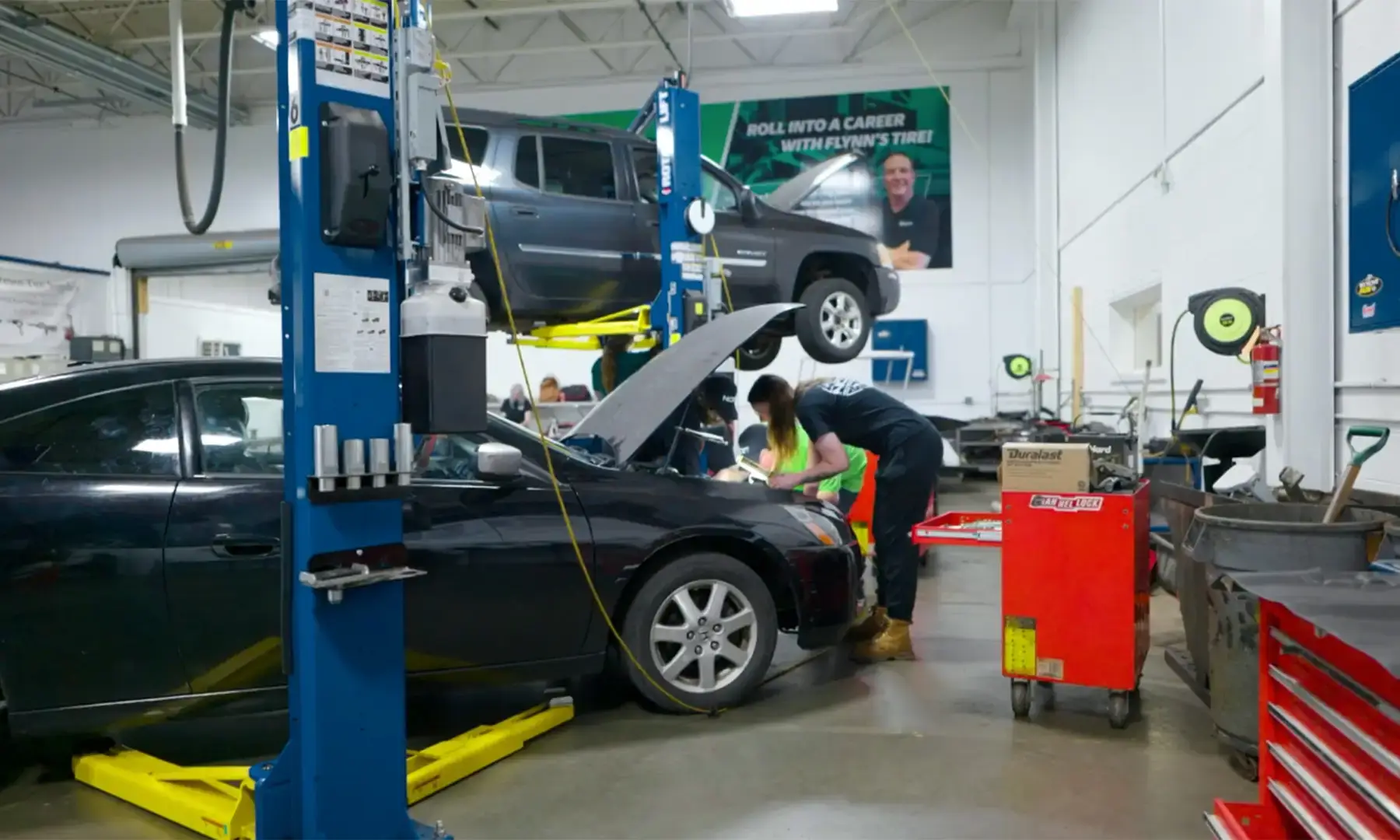
Students learn vehicle diagnostics, electrical systems, and repair on modern, computer-managed vehicles. The Automotive Technology program runs about 60 weeks and leads to an associate degree. Automotive service technicians and mechanics earned a median wage of $49,670 in May 2024. Growth is expected at 4% through 2034, with about 70,000 openings a year, one of the largest annual opening counts of any trade in this list.
Heavy Equipment Operations
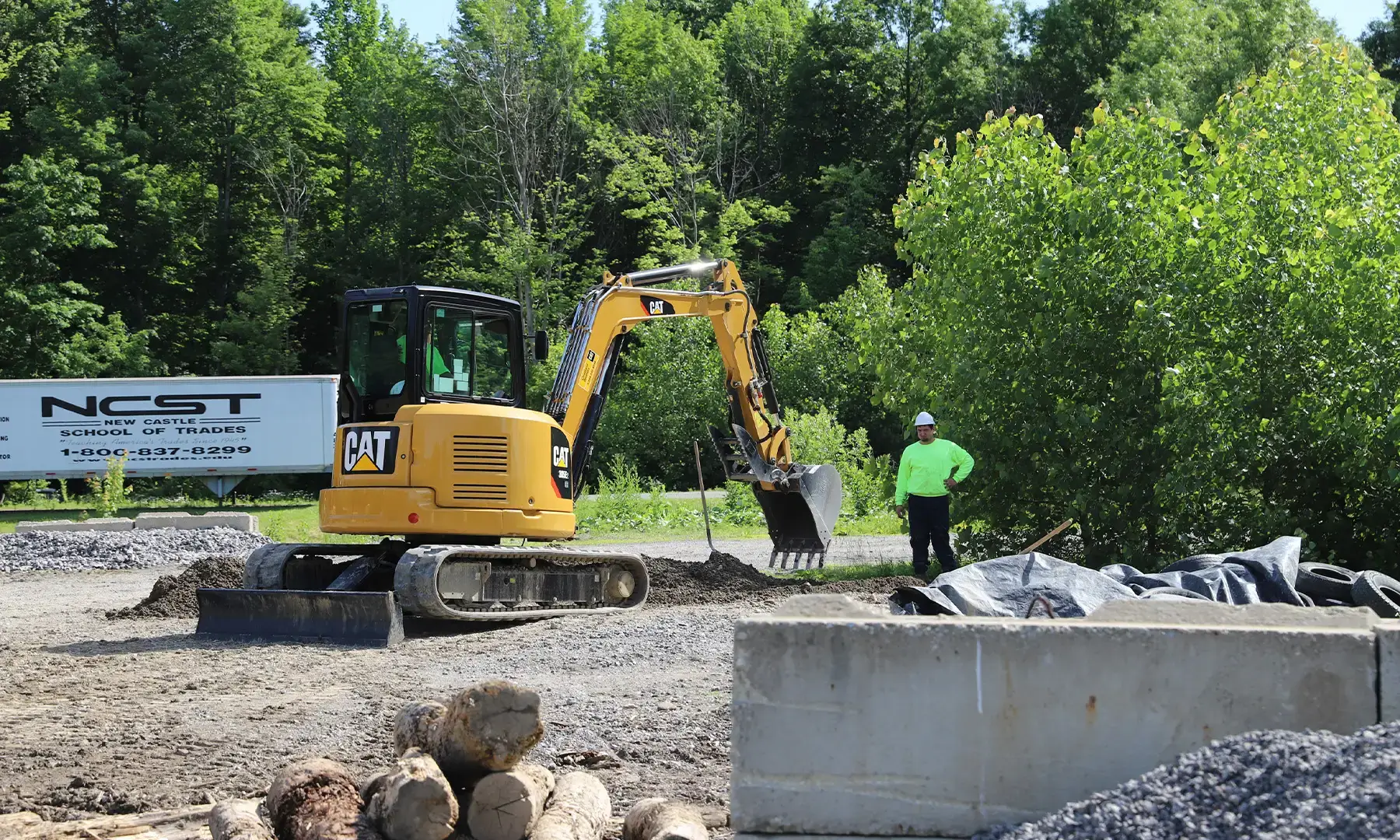
This diploma program trains students to safely operate bulldozers, excavators, and other heavy machinery, and also prepares students to test for a Class A Commercial Driver’s License. The Heavy Equipment Operations program runs about 30 weeks, one of the shorter diploma-length programs available. Construction equipment operators earned a median wage of $58,320 in May 2024, with 4% expected growth and about 46,200 openings a year.
Machinist & CNC Manufacturing
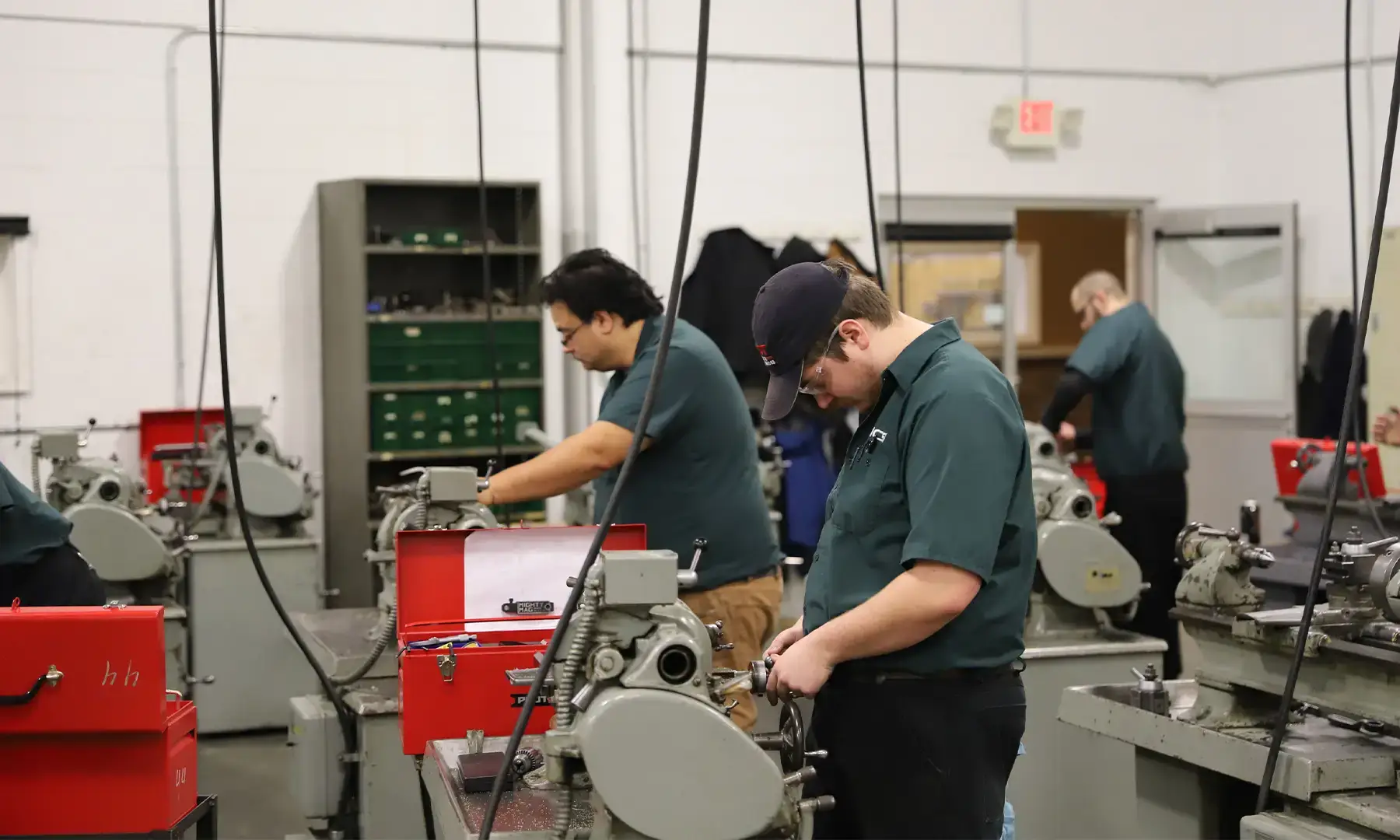
Students start with manual lathes, mills, and drill presses before moving into computer-controlled machining, 3D design, and CNC programming. The Machinist & CNC Manufacturing program runs about 44 weeks. Machinists earned a median wage of $56,150 in May 2024. Overall employment is expected to decline 2% through 2034 as automation increases output per worker. Even so, the Bureau of Labor Statistics still expects about 34,200 openings a year, driven almost entirely by retirements.
Motorcycle & Power Equipment Technology
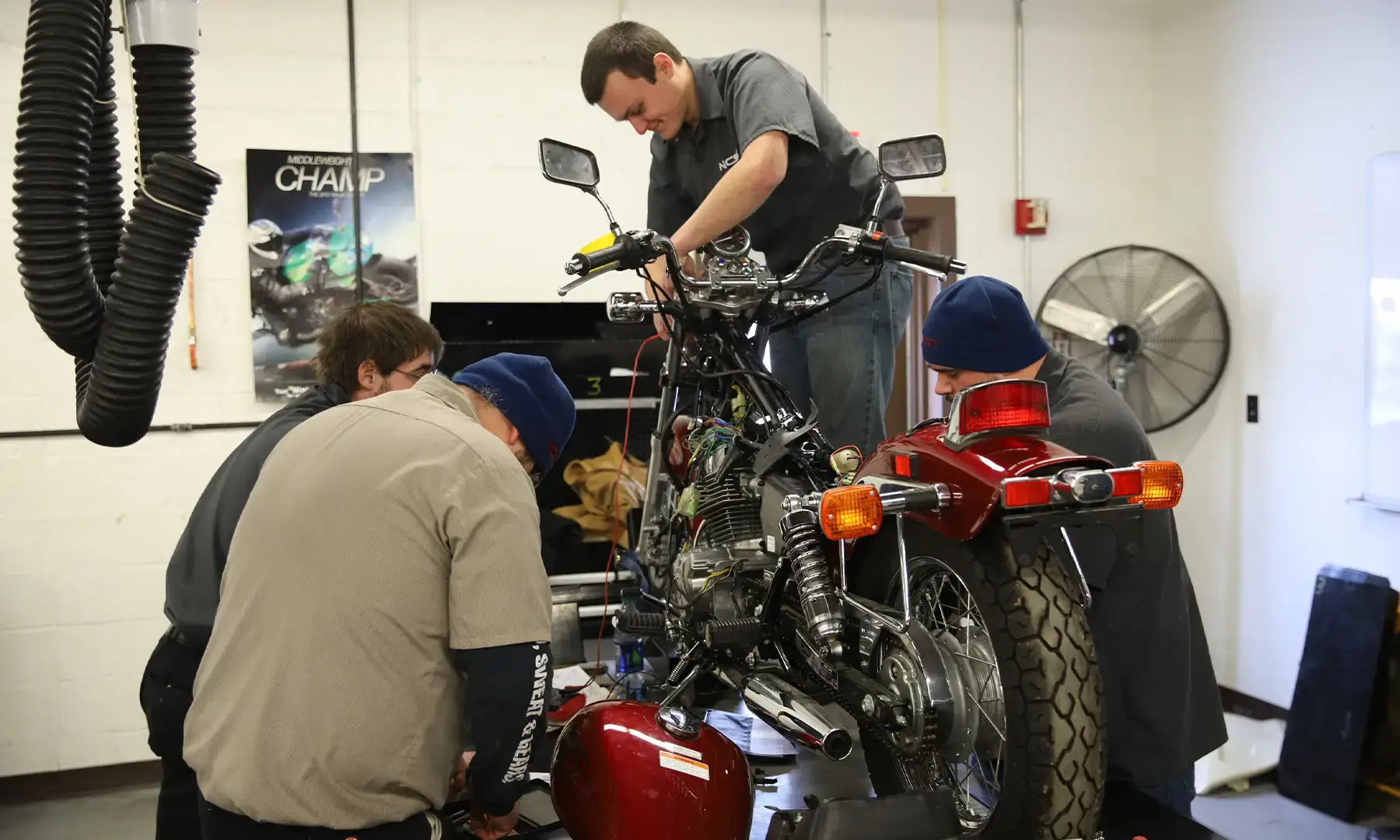
This program trains students to diagnose and repair motorcycles, ATVs, and small engines used in mowers, generators, and similar equipment. The Motorcycle & Power Equipment Technology program runs about 60 weeks. Small engine mechanics earned a median wage of $48,240 in May 2024, with 4% expected growth and about 7,600 openings a year. That’s a smaller field than most of the others on this list, but a steady one.
Building Technology
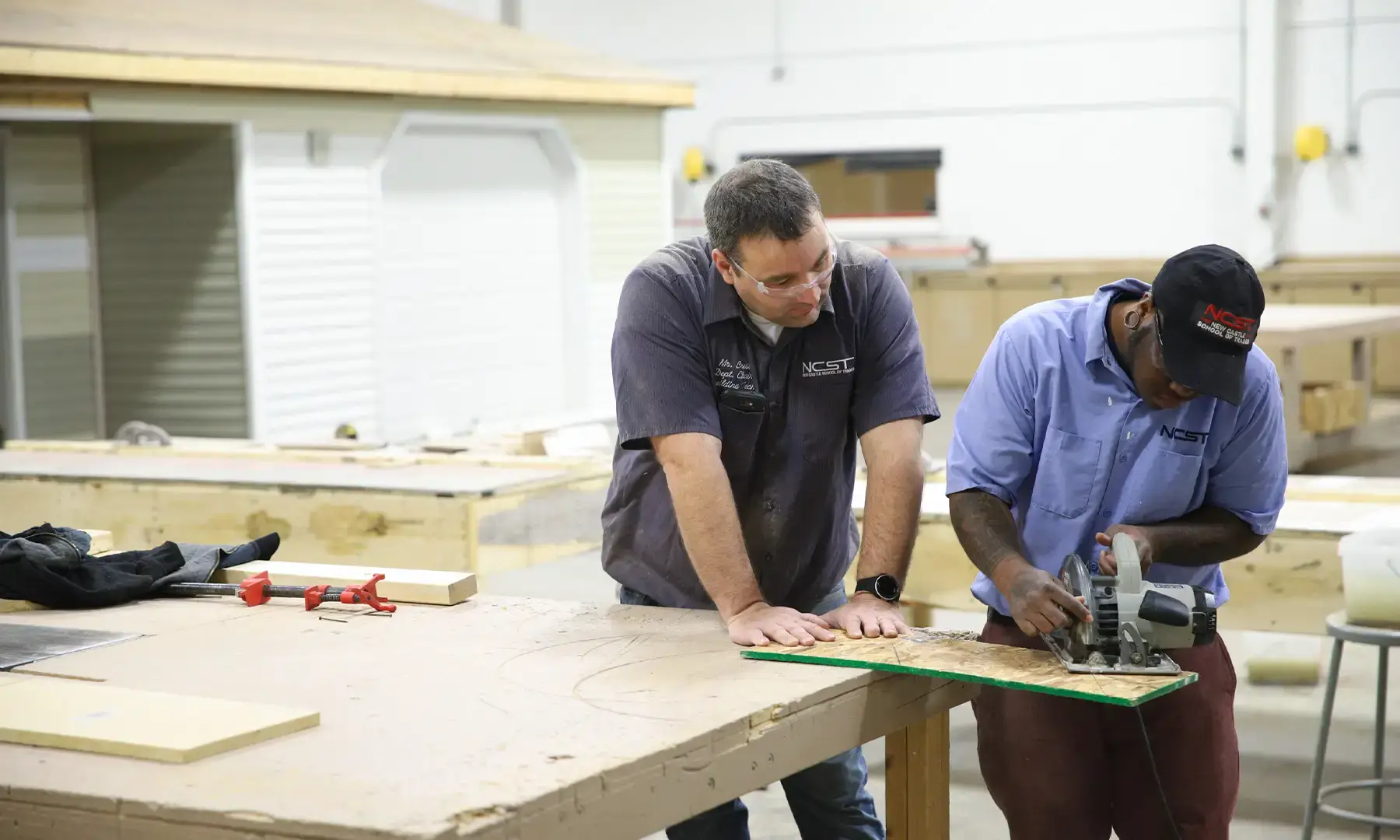
This program covers general construction: framing, carpentry, masonry, interior and exterior finishes, roofing, and basic electrical and plumbing, along with material costing and blueprint reading. The Building Technology program runs about 60 weeks and leads to an associate degree. Carpenters, the closest tracked occupation, earned a median wage of about $60,580 in May 2024. Construction and extraction as a whole is a field where the Bureau of Labor Statistics expects roughly 649,300 openings a year across all trades combined.
Commercial Truck Driving
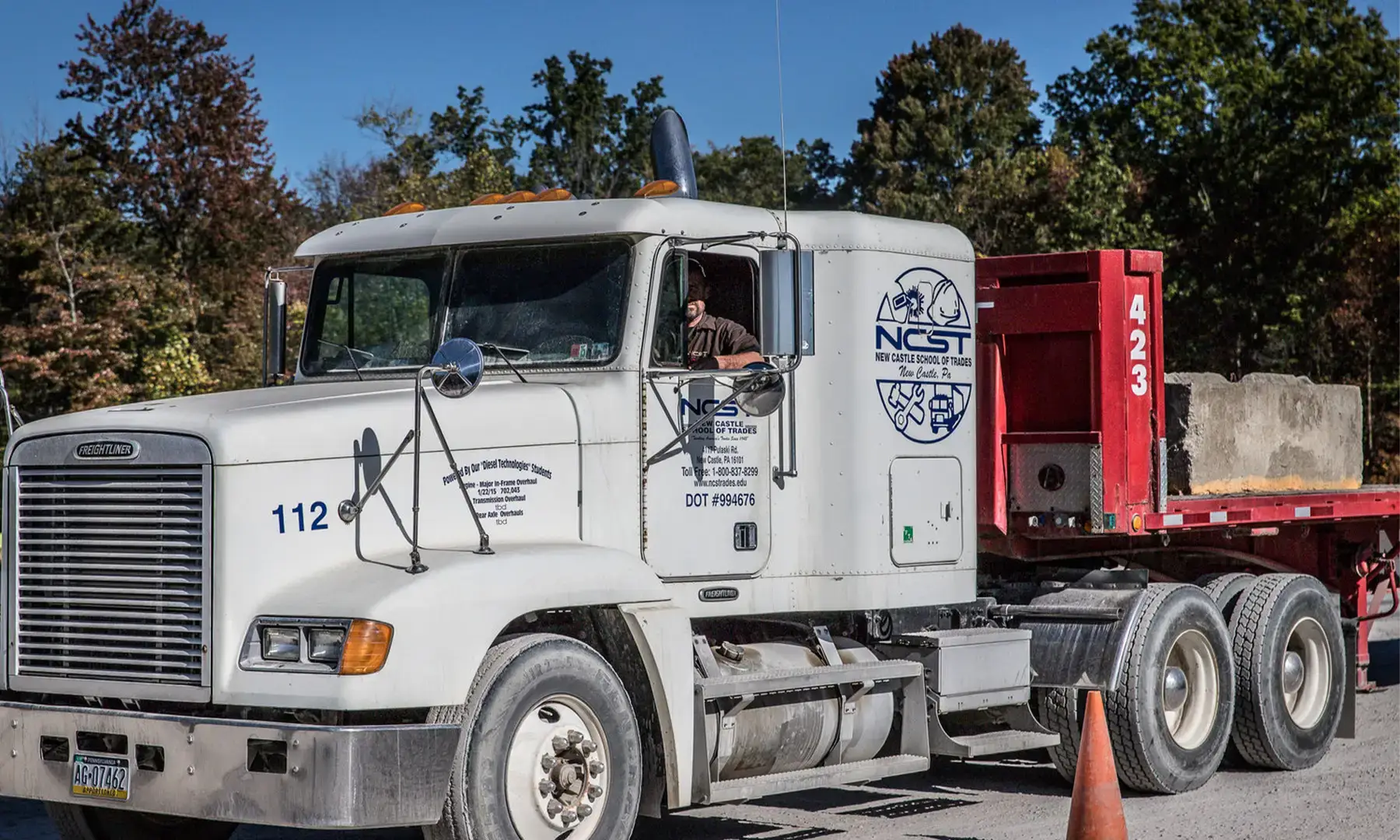
This is one of the shortest programs in trade education, often finishing in a matter of weeks rather than months. The Commercial Truck Driving program combines classroom instruction with behind-the-wheel training to prepare students for the CDL written and skills exams. Heavy and tractor-trailer truck drivers earned a median wage of $57,440 in May 2024, with 4% expected growth. About 237,600 openings are expected each year, the largest annual opening count of any trade covered here. Full CDL entrance requirements, including the permit and driving record needed to enroll, are covered on the trade school requirements page.
Certifications That Boost Job Skills and Pay
Most trades have industry certifications that go beyond what a base program covers, and employers often pay more for them. Automotive and diesel technicians can pursue ASE certification. HVAC technicians can pursue NATE certification and the EPA Section 608 credential, which is legally required to purchase refrigerant. Welders can pursue AWS certifications tied to specific processes and materials. Electricians work toward state licensure after their training. Costs for these exams typically run $50 to $500 depending on the credential.
Soft Skills and Well-Rounded Training
Beyond technical skills, trade school programs build the full range of abilities a graduate needs for independent work, from routine daily tasks to unexpected problems on the job. Communication, time management, and teamwork are part of nearly every program, since these skills come up constantly in shop and jobsite settings, even though they’re harder to teach directly than a technical procedure. Combined with safety training and hands-on practice, this well-rounded preparation is what separates a graduate who is job-ready from one who only knows the theory.
How Trade Skills Build Long-Term Earning Potential
The wage figures above are starting points, not ceilings. As a tradesperson gains experience and additional certifications, pay typically climbs well past the median. Electricians, for example, range from under $42,640 at the 10th percentile to more than $108,510 at the 90th, a spread driven by experience, specialization, and location. Progressing from apprentice to journeyman to master status is one path to that higher range.
A second path is business ownership. Some tradespeople eventually start their own electrical, plumbing, or HVAC contracting business, which can significantly increase earnings beyond what an hourly wage allows. Building and managing a team of other skilled workers adds a business-management skill set on top of the trade itself. For a fuller look at how trade credentials compare to a four-year degree on lifetime earnings and return on investment, see trade school vs. college.
The Bottom Line
Trade school programs are a practical alternative to a four-year degree: shorter timelines, focused training, and a direct path to a documented, in-demand wage. Ten fields are covered here: welding, HVAC, electrical, diesel and heavy equipment repair, automotive, heavy equipment operation, machining, motorcycle and small engine repair, building construction, and commercial truck driving. Each one leads to a career the Bureau of Labor Statistics tracks with real wage and job-growth data, not just industry estimates.
Frequently Asked Questions
What can someone learn at trade school?
Hands-on programs in fields like electrical work, HVAC, welding, diesel and automotive repair, machining, heavy equipment operation, motorcycle repair, building construction, and commercial truck driving. Most combine classroom instruction with shop or field training.
How long do trade school programs take?
Most run 30 to 60 weeks. Commercial truck driving is one of the shortest, often finishing in a matter of weeks, while associate-degree-level programs like electrical or automotive technology run closer to 60 weeks.
Do trade schools offer certifications or degrees?
Yes. Depending on the program, students can earn certificates, diplomas, or associate degrees. These credentials show employers a graduate is trained and job-ready.
Which trade school programs pay the most?
Based on May 2024 median wages, electricians ($62,350), diesel technicians ($60,640), and carpenters (about $60,580) lead the fields covered here, though pay in every trade varies by experience, location, and certification.
Which trade has the strongest job growth?
HVAC/R and electrical work have the strongest expected growth through 2034, at 8% and 9% respectively, both well above the average for all occupations.
Can someone learn more skills after finishing a program?
Yes. Most tradespeople keep building skills on the job, and many pursue additional certifications, like CDL endorsements or ASE and NATE credentials, that qualify them for higher pay or specialized work.
Do trade school graduates need a four-year degree to advance?
No. Advancement in the trades typically comes through experience, certifications, and progressing from apprentice to journeyman to master status, or through starting an independent business, not through a four-year degree.