
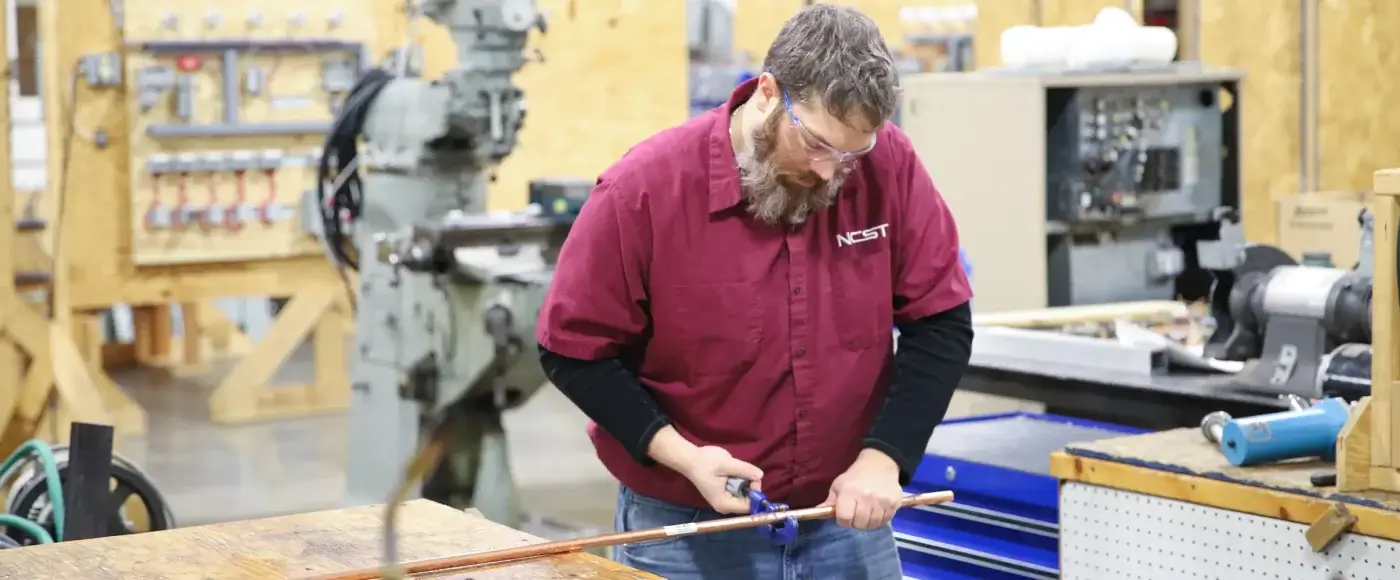
Trade school is a fast, hands-on path into skilled work. It costs less and takes less time than a four-year degree and leads directly into jobs like welding, electrical work, HVAC, equipment repair, and truck driving.
A 2025 American Staffing Association survey found that 33% of U.S. adults now recommend trade school over a four-year degree for high school seniors, up from 28% the year before. Among Baby Boomers, the group with the most hindsight on how their own career choices played out, 41% favor the trade path.
This guide covers what trade school is, what it isn’t, what it costs, how long it takes, and how it compares to community college and a four-year degree.
Key Takeaways
- Trade school is career-focused vocational training built around hands-on lab and shop work, not general academic coursework. Programs typically run 6 months to 2 years.
- Graduates earn a certificate, diploma, or specialized technology degree, not a traditional academic degree. For licensed trades (electrical, plumbing, HVAC), a state licensure exam is usually required after program completion.
- Admissions are generally open-access: no GPA cutoffs, no SAT or ACT requirement, and no upper age limit. A high school diploma or GED is the standard baseline.
- Total program cost typically runs a fraction of a four-year degree, and graduates enter the workforce years sooner. See how much trade school costs for a full breakdown.
Types of Credentials
Trade school (also called vocational school or technical school) trains you for one specific job. You spend most of your time in a shop, lab, or bay instead of a lecture hall, using the same tools you’ll use on the job later. Instructors usually worked in the trade before they started teaching it. Explore more of what you can learn in trade school →
Trade school is not the same as a two- or four-year college degree. It doesn’t hand out a bachelor’s degree or a regular college associate degree. Instead, depending on how long the program runs, you’ll earn one of these:
| What You Can Earn | How Long It Takes | What It Means |
| Certificate | Under 1 year | Training in one specific skill |
| Diploma | 7 months to 2 years | Broader training across a full trade |
| Specialized Technology Degree | Up to 2 years | Longer job training, different from a college associate degree |
Generally, shorter programs (under a year) end in a certificate or diploma. Longer programs, closer to two years, often end in an applied or specialized technology degree. That degree is different from a regular college associate degree because every class is job-specific. There’s no general education coursework to sit through.
For licensed trades, finishing the program isn’t the last step. Electrical, plumbing, and HVAC work usually require a state license exam after you graduate. Some fields also have extra certifications that matter to employers, like HVAC Excellence and NATE certification in the HVAC trade. Employers in these fields often care about the state license as much as, or more than, the school certificate itself. A good program trains you for that exam as part of the coursework, not as an extra step you’re on your own for.
For the full list of what’s required to enroll and what licenses come after, see trade school requirements→
Program Structure and Admissions
Getting into trade school is usually easier than getting into college. Here’s what that looks like at most schools:
- No GPA requirement. Old grades or a rough transcript won’t hold you back.
- Rolling admissions. Most schools accept students all year, not just once a year. That matters if you’re working or have a family to plan around.
- No age limit. Trade programs take in recent high school grads and people in their 30s, 40s, and beyond, with no difference in how you’re treated.
Typical requirements include a high school diploma or GED, a completed application, and some kind of entrance evaluation or interview. Many schools also require a campus visit before you enroll, which is worth doing regardless, since it’s the best way to see the actual equipment and shop space you’d be training in. SAT and ACT scores usually aren’t required anywhere.
How long a program takes depends on the trade. CDL training can take just a few weeks. Heavy equipment operation programs often run around 30 weeks. CNC machining and welding programs are commonly in the 44 to 50 week range. Programs that lead to a technology degree, like automotive, electrical, HVAC, and diesel, usually run closer to 60 weeks. For a full breakdown by trade, see how long does trade school take.
Trade School vs. Community College vs. Four-Year College
These three paths are different in time, cost, and structure. For the full comparison, including debt numbers and how fast each one pays off, see trade school vs. college →
Here’s the short version:
| Trade School | Community College | Four-Year College | |
| How long it takes | 6 weeks to 14 months | 2-3 years to finish | 4-6 years |
| Total cost | $5,000-$35,000 | $10,000-$25,000 | $40,000-$200,000+ |
| Average debt at the end | ~$10,000 | ~$15,000-$20,000 | ~$36,000+ |
| What you study | Job skills only | Mix of general classes and job skills | Broad academic subjects |
| What you earn | Certificate, diploma, or technical degree | Associate degree, often transfers | Bachelor’s degree |
Trade school and community college both get you into skilled work, but they’re built differently. A community college associate degree includes general classes and is partly designed so you can transfer to a four-year school later. A trade school program is built around one job from day one. A four-year degree is still the standard path, and often the required one, for jobs like nursing, engineering, teaching, and law.
Common Trade School Programs
Program names and lengths vary from school to school, but most trade schools train for a similar core set of trades:
- Welding. Covers processes like MIG, TIG, and stick welding. Entry-level programs typically run several months to about a year.
- Electrical. Prepares students for entry-level wiring work or an electrician apprenticeship. Programs often run one to two years depending on depth.
- HVAC and refrigeration. Heating, cooling, and refrigeration systems, both residential and commercial. Programs range from under a year to about two years.
- Diesel and heavy equipment repair. Engine diagnostics and repair for trucks, construction equipment, and industrial machinery. Usually one to two years.
- Commercial driving (CDL). The shortest programs in this list, often just a few weeks, to prepare for a Class A or Class B commercial license.
- CNC machining. Training on manual and computer-controlled machine tools. Typically under a year.
- Automotive technology. Engine, transmission, brake, and electrical diagnostics. Usually around a year to two years.
- Motorcycle and power equipment repair. Small-engine and specialty equipment repair, on a timeline similar to automotive programs.
Exact program length, credential type, and cost vary by school, so it’s worth comparing a few directly if you’re narrowing down where to apply.
What Kind of Job Can You Get After Trade School?
This is the question that actually matters once you’ve picked a trade: what job title are you working toward, and what does day one look like? The short answer, by trade:
- Welder, fabricator, or pipe welder
- Apprentice electrician, industrial electrician, or maintenance electrician
- HVAC installer, service technician, or refrigeration technician
- Diesel technician, heavy equipment mechanic, or fleet maintenance technician
- Truck driver positions, including long-haul, local delivery, and specialized heavy hauling
- Machinist, machine operator, or tool and die support
- Automotive service technician or service advisor
- Small-engine technician or service technician
These are entry points, not endpoints. Pay and title tend to move with experience, and in licensed trades, with the certifications and licenses you earn after you’re already working. What a welder earns in year one and what a welder with five years of pipeline experience earns are two very different numbers, and the same is true across every trade on this list.
How to Check If a Trade School Is Worth Your Time
Not every trade school delivers what it promises. Before you enroll anywhere, check a few things:
Is it accredited? Accreditation decides whether employers respect your certificate and whether you can get federal financial aid. Look for accreditation from a recognized national or regional body, such as the Accrediting Commission of Career Schools and Colleges (ACCSC).
What’s their job placement rate? Ask for numbers by program, not one number for the whole school. Ask how they define “placed,” full-time, in the field, within how many months.
Do they have real employer relationships? A school with named employer partners in your area is a better sign than one that just says the field is “in demand.”
Are they clear about licensing? For electrical, plumbing, and HVAC programs, ask exactly what the program covers and what licensing steps are still left after you graduate.
Two outside resources worth checking: the U.S. Department of Labor’s TrainingProvidersResults.gov, and the FTC’s guidance on vocational school advertising. The FTC has taken action against trade programs before for misleading claims about job outcomes, so a little skepticism here is reasonable.
Who Trade School Fits Best
Trade school tends to work well for people who already have a rough idea of what job they want and want the fastest real path to it. That includes people who learn best by doing rather than sitting through lectures, adults switching careers who can’t spend four years out of work, veterans with mechanical skills leaving the service, and people who want to eventually run their own HVAC or electrical business.
It’s a weaker fit if you haven’t decided what you want to do yet and need time to explore. It’s also not a substitute for jobs that require a bachelor’s degree by law or standard practice, like nursing, engineering, teaching, and law.
Frequently Asked Questions
Is trade school the same as vocational school?
Yes. Trade school, vocational school, and technical school all mean the same thing: a school that trains you for a specific hands-on job instead of teaching general subjects.
Does trade school give you a degree?
Not a regular college degree. You’ll usually earn a certificate, a diploma, or, for longer programs, a technology degree. It’s different from a college associate degree because every class is job-specific. There’s no general education coursework.
How long does trade school take?
Anywhere from a few weeks to about two years, depending on the trade. CDL training can take a few weeks. Electrical technology or diesel repair usually take around 60 weeks.
Do you need a high school diploma to go to trade school?
Yes, almost always. A high school diploma or GED is the standard requirement. Most programs don’t require SAT or ACT scores or a minimum GPA.
Can you go to trade school as an adult or career changer?
Yes. Most trade programs have no age limit and don’t require any prior experience in the field. Rolling admissions mean you’re not stuck waiting for one enrollment date a year.
Is trade school cheaper than a four-year degree?
Usually, yes, both in total cost and in how fast you start earning. Full comparison at how much does trade school cost and trade school vs. college.
Do you still need a license after trade school for jobs like electrical or HVAC?
Usually, yes. Finishing trade school gets you ready to take a state license exam, it doesn’t replace it. Employers in these fields usually care most about the state license, along with any related certifications.
What kind of job can you get after trade school?
That depends on the trade. Common jobs include electrician, welder, HVAC technician, diesel or automotive technician, CDL truck driver, CNC machinist, heavy equipment operator, and industrial maintenance technician.
Summary
Trade school works differently than a two- or four-year degree. It’s shorter, focused on one job, built around hands-on training, and open to almost anyone regardless of age or school history. You’ll earn a certificate, diploma, or technology degree instead of a traditional college degree, and for licensed trades, it’s the first step toward a state license, not the final one. For jobs like welding, HVAC, electrical work, diesel repair, and commercial driving, it’s usually a faster and cheaper way into the workforce than a two- or four-year degree. For jobs that legally require a bachelor’s degree, it’s not a substitute.