
Becoming a Skilled Maintenance Professional
For most high school seniors, the question isn’t whether to go to college. It’s where.
Josh Speer didn’t question it either. Until he did.
Watch: Josh Speer’s Story at NCST
Discovering The Trades as a Career
The assumption gets baked in early, in guidance counselors’ offices, in dinner table conversations, in the quiet pressure that builds through four years of classes designed to prepare you for four more. College is the default setting for life after graduation, and for many students, no one ever questions it.
“I always thought I would go to college,” he said. “Senior year kind of switched it up for me.” Josh graduated from Riverside High School in New Castle, Pa., and was a normal student. He described himself as a fly-under-the-radar kid: he got along fine, kept his head down, and made it through school. But as senior year arrived and the college conversation grew louder, something didn’t feel right.
It wasn’t that college seemed too hard. It was that he could already see what more years in a classroom would look like for him, and he didn’t want it. “Just doing homework all the time, just being in a classroom the whole time,” he said. “I can’t do it. I couldn’t do it.”
For many students, that feeling gets buried. It’s written off as laziness, fear, or a lack of readiness to grow up. For Josh, it was self-awareness. He wasn’t a sit-and-memorize learner. He had never been. And rather than spend four years and tens of thousands of dollars studying things that didn’t interest him, Josh started looking for another way.
“I just realized college wasn’t the answer for me,” he said. “Trade school was my best option.”
Finding New Castle School of Trades
Once the college assumption fell away, the path forward came into focus quickly. Josh began researching trade schools and programs in the area. New Castle School of Trades was the closest option, so he scheduled a visit to see the campus for himself.
He enrolled that same day. “I took a visit here. I thought it was a pretty cool campus,” he said. “I got to talk to all the teachers, and I just thought it was a good fit.”
There was no agonizing over the decision. The hands-on environment, the smaller class sizes, the instructors who spent time talking to him all added up fast. For someone who had spent years in classrooms that felt out of sync with how he learned, walking into NCST felt like the opposite.
A Different Kind of Classroom
Josh enrolled in the Industrial Electro-Mechanical Technology program, building skills in major building, industrial, and alternative energy systems. One wall is dedicated to electrical systems. Another features live plumbing. Every corner of the space is a working system, something real that can be taken apart, diagnosed, and put back together.
“We have a lot of different stuff we learn in here,” he said. “Something different every day. That’s what I like about it.”
That daily variety, and the constant physical engagement with real problems, is exactly what Josh was missing. In trade school, information doesn’t live on a page waiting to be memorized and forgotten. It lives in the wall in front of you.
“If you get all the information in a book, you’re not really seeing it in front of you,” Josh said. “Seeing it in front of you is definitely a lot of help.”
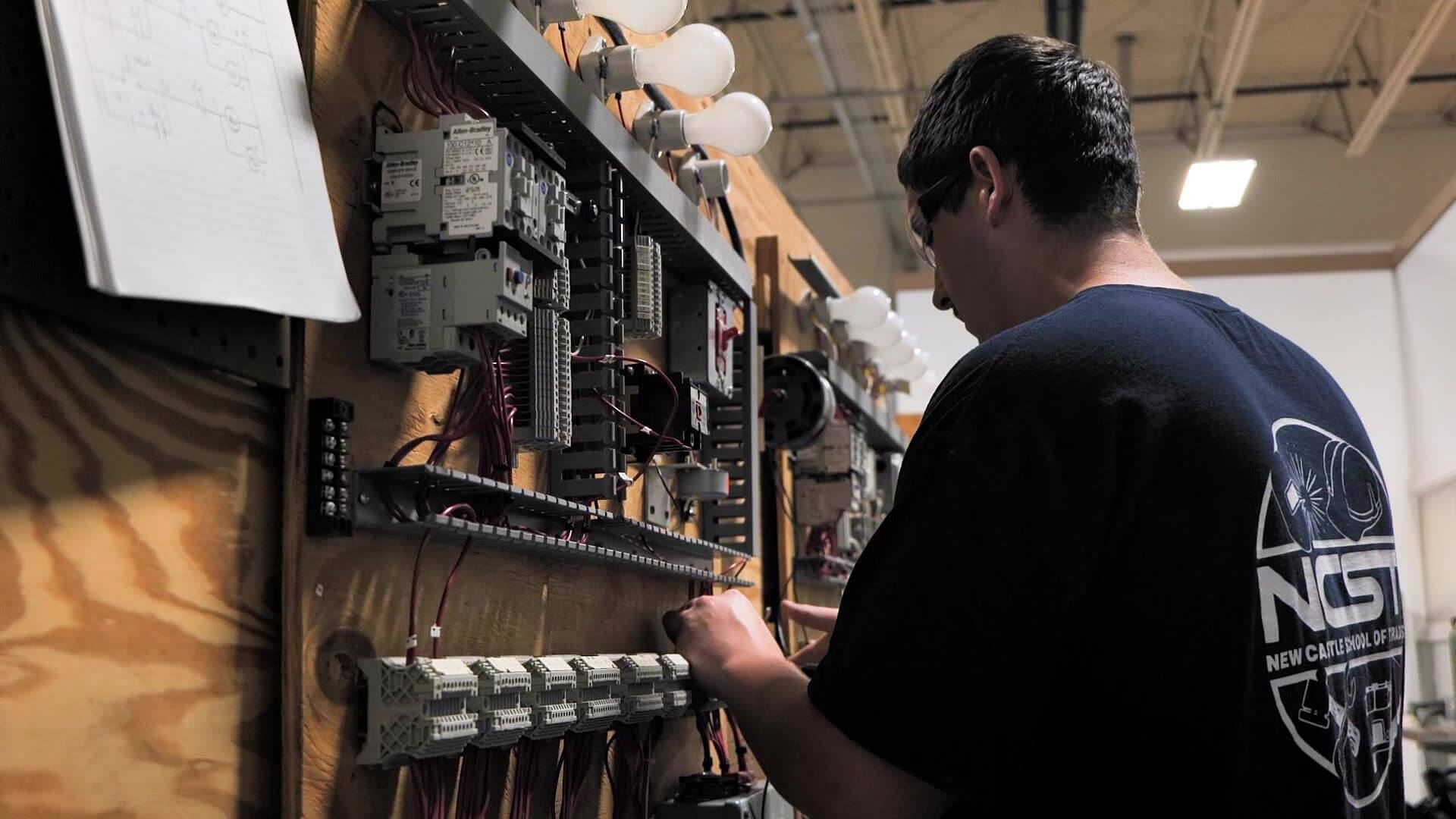
Smaller class sizes further sharpen that experience. When a concept isn’t clicking, instructors notice. The class doesn’t move on without you.
“We have a smaller class here, so the teacher can help whoever needs help,” he said. “I feel like they care a little bit more, because this is a life career for me.”
Built-In Community
What Josh didn’t anticipate when he enrolled was the culture he would find inside the program. His classmates look out for each other in a way that surprised him. “I’m kind of the kid of the group,” he said, laughing. “They always help me. They definitely look out for me.” It mirrors the way the trades really work in the field: knowledge passed between people, experience shared freely, everyone pulling toward the same outcome. Nobody gets ahead by holding someone else back. “We all help each other here,” he said. “I’m grateful I met the guys here.”
His hard work paid off. In January 2026, Josh was accepted into the National Honor Society with a handful of his peers.
A Future-Proof Career
Ask Josh about the long-term outlook for his chosen field, and he doesn’t blink.
“There’s always going to be a need for a guy who fixes things,” he said. “You’re always going to have stuff that’s broken. We’re the guys you call in to fix it.”
He and his classmates have talked about what it means to work in a field that automation and artificial intelligence can’t easily touch. Technology reshapes industries, but the skilled trades remain stubbornly hands-on. Someone still has to show up and put their hands on it.
“We kind of know we’ve got job security,” Josh said. “It’s a pretty future-proof career.”
That confidence is already paying off. Before graduation, Josh secured a position with Elwood Group, a specialty metals company that helped fund a portion of his schooling through NCST’s employer partnership program. After graduation, he’ll enter their apprenticeship program before transitioning to a full-time role, a pipeline made possible by employers actively recruiting on the NCST campus throughout the year.
“Different companies come in every quarter that offer all these good things to you,” he said. “They want you to apply. They’re looking for you.”
The Advice He’d Give
For students wrapping up high school who feel like the standard four-year path doesn’t quite fit, but aren’t sure what the alternative looks like, Josh’s advice is direct.
“Do some research, because there are options out there,” he said. “Trade school is always an option. They’re more affordable and definitely better learning.”
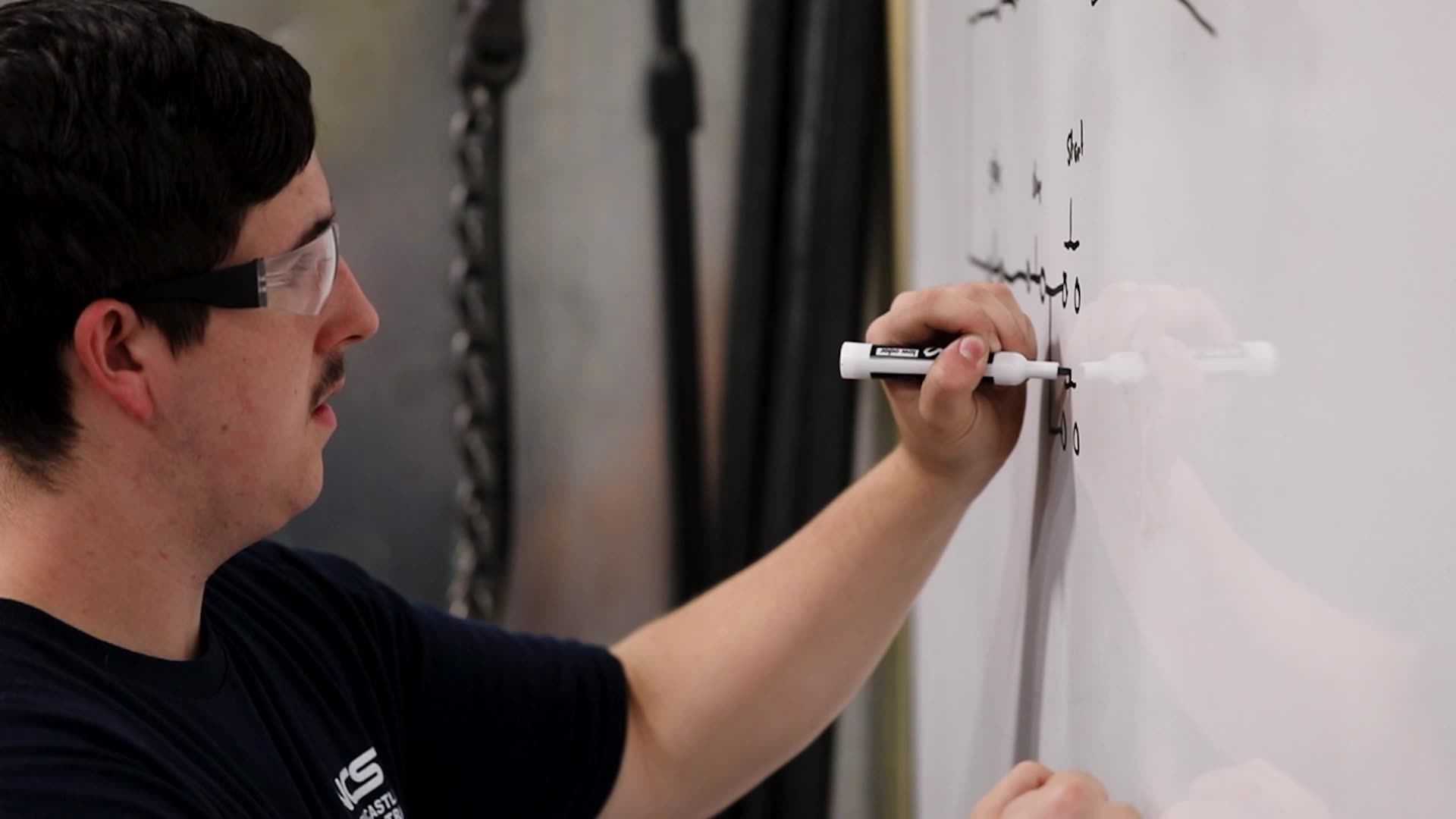
When he tells people in his community that he chose the trades, the reaction is almost always the same.
“They have so much respect for me,” he said. “They’re like, ‘That’s the best option you could do for yourself.’ The community definitely backs the trades.”
His final word for anyone still on the fence is to just show up and see for yourself.
“Schedule a visit. It can’t hurt to just come here and check it out,” he said. “That’s what I did, and I thought it was the right fit. It’s the best decision I’ve ever made.”