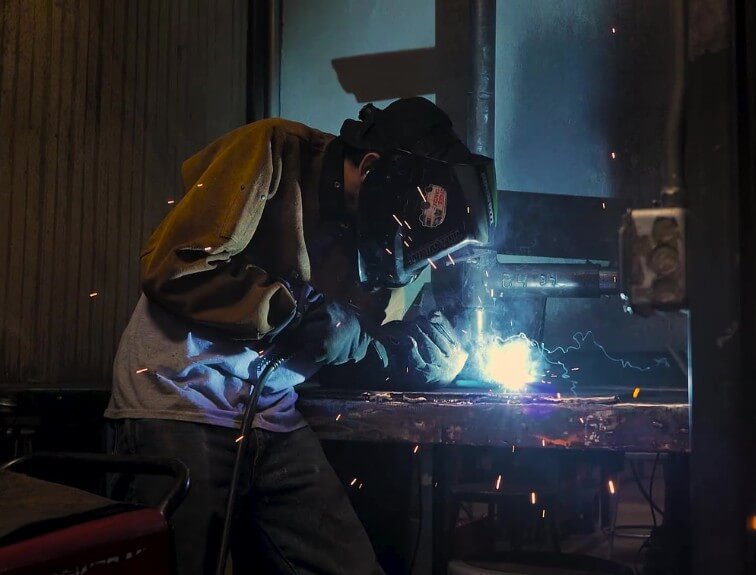
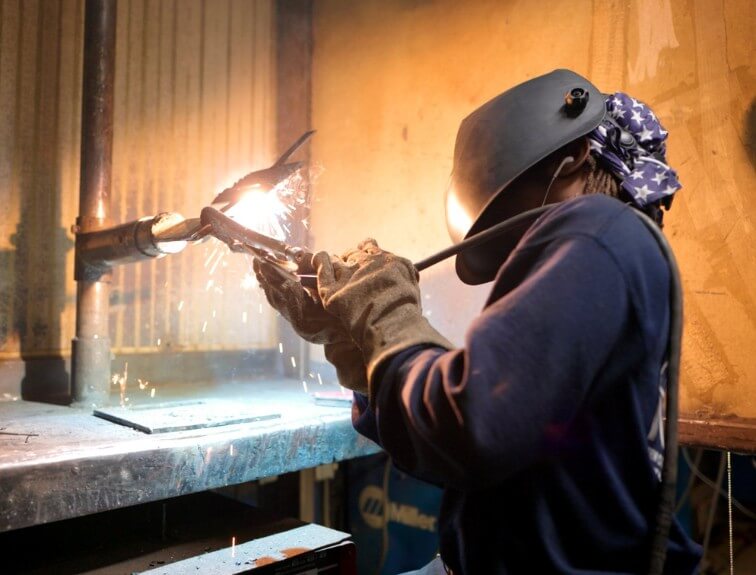
Bridges, pipelines, buildings, and machines all share one thing they depend on: a strong weld. Someone has to join the metal that holds up a water tower or keeps a factory line running. There’s a strong demand for people with the skills to keep their community together. The world needs more welders.
New Castle School of Trades offers a Combination Welding program at its New Castle, PA campus and a matching Combination Welding program at its East Liverpool, OH campus. Both prepare students for the same kind of work: joining metal safely and correctly. In a trade where the results of your work hold up buildings, keep machines running, and support infrastructure for decades, it’s NCST’s duty to make sure students become skilled welders by the time they graduate. Many people find great satisfaction in welding because of the direct impact their work can have on the community around them. Are you ready to step up and give back to your community with the skills a welding education from NCST can give you?
A Trade the Country Cannot Do Without
Welding is not a trade that is fading away. The American Welding Society reports that the country will need roughly 330,000 new welding professionals by 2028, with about 82,500 welding jobs opening up each year. That need comes from retirements and a stronger need for welders on new building projects. The average welder in the U.S. is 55 years old, and a large share of the current workforce will leave the field within the next decade.
This shortage is not just a number on a report. Every bridge repair, every new pipeline, every piece of farm or factory equipment that gets fixed instead of scrapped depends on someone with welding skill. Without skilled welders to join the workforce, many projects and repairs will go unfinished or behind schedule. A graduate who enters the welding workforce will be doing work that is needed by the community and is appreciated.
What Students Learn at Both Campuses
Both NCST welding locations, New Castle, PA and East Liverpool, OH, run a 50-week Combination Welding program based on American Society of Mechanical Engineers (ASME) and American Welding Society (AWS) specifications. Students train in the welding skills used across the industry, including ARC, MIG, and TIG welding, along with the different techniques necessary to learn each properly. Students also study blueprint reading, safety practices, and the proper use of industry-standard tools and equipment.
Because the program is hands-on at both campuses, students spend time practicing instead of just reading about the process. Welding is a physical skill that has to be built through repetition, and NCST structures both locations around that kind of practice. The only way to get clean welds is through repetition and consistency, something only a hands-on school like NCST can give you.
Why the Work Feels Meaningful
A finished weld holds something together for years without failing. Going through everyday life in their community, a welder can point to a piece of equipment, a structure, or a repair and know exactly what role they played in making it safe and functional. That clear, physical result is part of why so many graduates describe welding as satisfying work rather than just a paycheck.
There is also a connection between the work and the people who depend on it. A repaired piece of farm equipment means a farmer does not lose a harvest, and more food is put on people’s tables. A properly welded support beam means a building stays standing and its occupants get to enjoy peace of mind. A pipeline weld that is done correctly means a community’s water or fuel supply keeps running safely. Welders are not working in the abstract; their work shows up in places that their neighbors depend on every day.
NCST has many graduates who found this kind of purpose in welding. Sebastian Lewis’s story, for example, describes how he discovered welding in his high school’s vocational program and built it into a full career path. Stories like his show how a hands-on program can turn an early interest into steady, meaningful work.
Check Out Sebastian Lewis’s Trade School Story →
Where a Welding Career Can Lead
Graduates of NCST’s Combination Welding program are prepared for entry-level roles such as:
- Combination welder
- Fabricator
- Repair welder
- Pipeline welder
- Pipe welder
- Construction welder
- Burner
- And many more
With experience and additional certifications, welders can also move into specialized fields such as pipeline work, structural steel, or shipbuilding. Eventually, they can even advance into inspection and supervisory roles. The skills learned in the program provide a stable foundation to build on for years.
Anyone interested in stepping up to keep their community running can learn more about admissions, look into financial aid options, or schedule a visit to see the welding labs at either campus.