
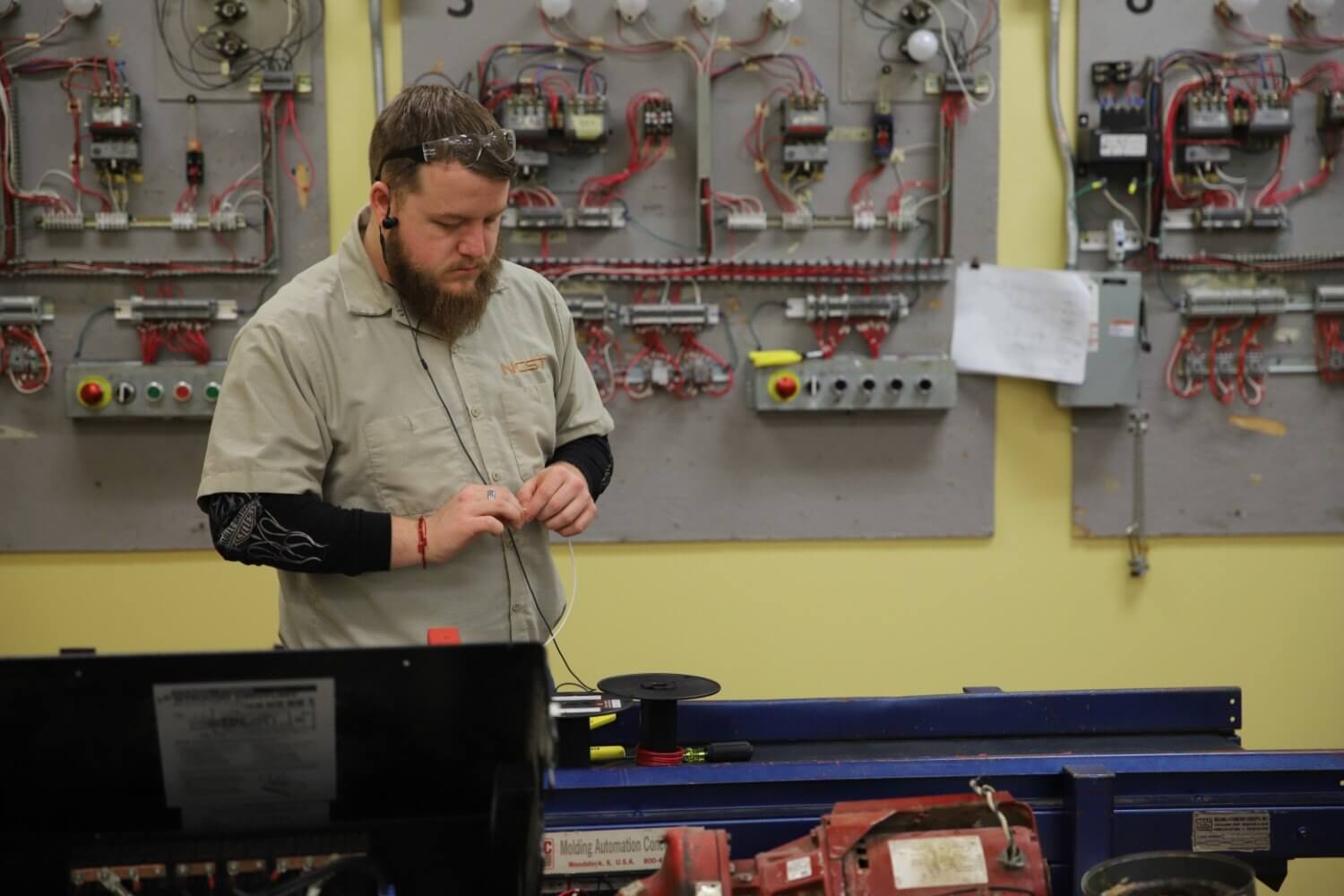
Anyone researching trade school pathways has probably come across two programs that sound very similar: Electrical Technology and Industrial Electro-Mechanical Technology. Both involve wiring and troubleshooting, and both lead to steady work, but the day-to-day training and the jobs that follow are different.
What Does an Electrical Technician Do
An electrical technician installs, maintains, and repairs electrical systems. This can mean wiring a new building, troubleshooting a circuit breaker panel, or programming a control system that runs a piece of equipment. Electrical technicians work in homes, businesses, and factories. Their job centers on one thing: electrical systems.
What Does an Industrial Electro-Mechanical Technician Do?
An industrial electro-mechanical technician, also called an industrial maintenance technician, keeps facilities and equipment running. This job covers more ground than electrical work alone. It can include electrical repairs, but it also covers HVAC system maintenance, basic welding, plumbing, rigging, and forklift operation. Instead of specializing in one system, this technician is trained to handle whatever breaks down in a facility on a given day.
The short version: an electrical technician is a specialist. An industrial electro-mechanical technician is a generalist who can also handle electrical work.
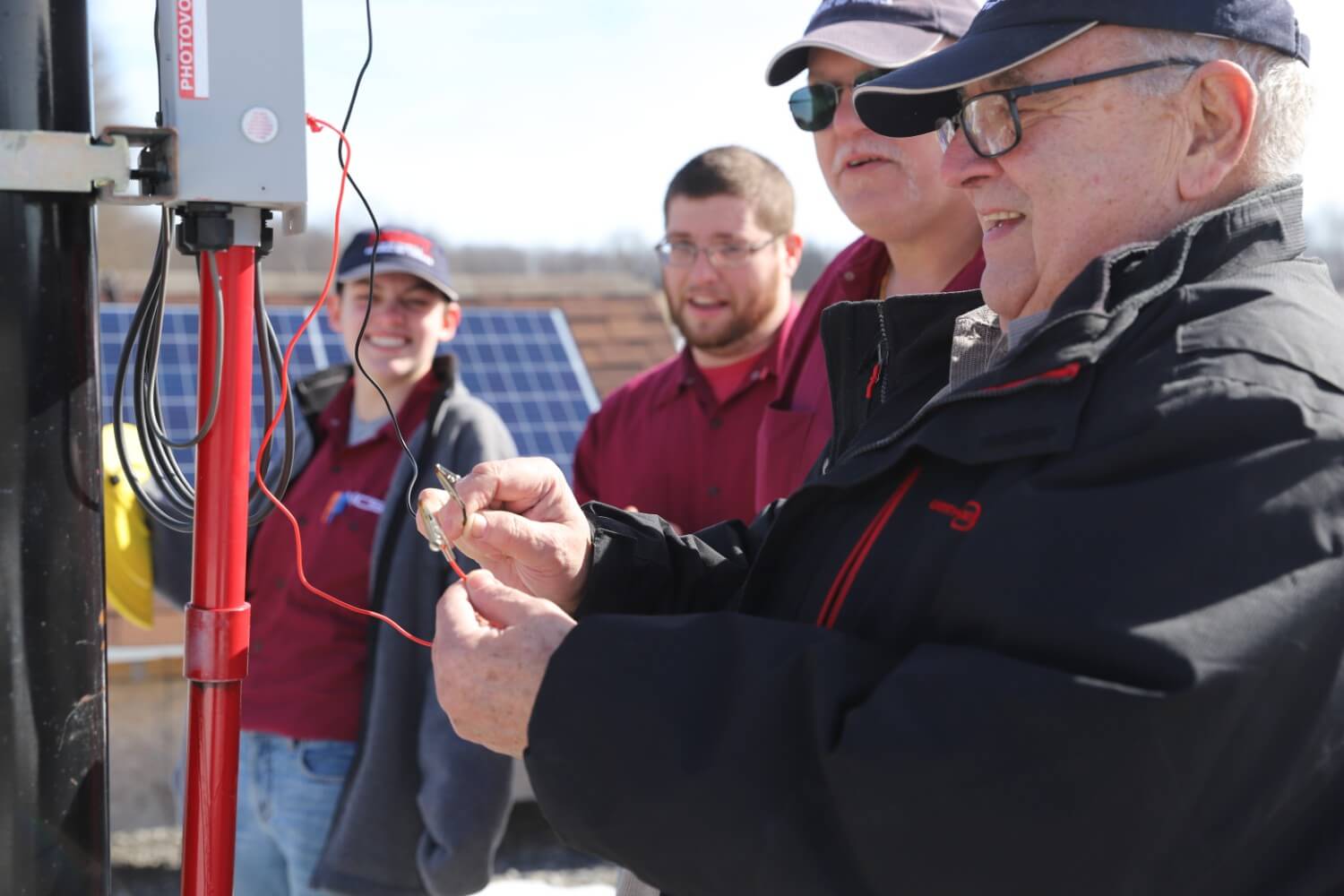
Comparing the Programs at NCST
New Castle School of Trades offers both programs at its New Castle, PA campus, and both take 60 weeks to complete. Both end with the same credential, an Associate in Specialized Technology Degree. That is where the similarities between the programs end.
The Electrical Technology program focuses entirely on electrical systems. Students train on programmable logic controllers, oscilloscopes, motor control equipment, meters, and conduit benders. Coursework covers residential and commercial wiring, machine control, telecommunications, and solid-state electronics.
The Industrial Electro-Mechanical Technology program covers a wider range of subjects. Students take courses in electrical services, HVAC, combination welding, basic rigging, forklift operation, along with technical math, business management, and job search skills.
Students who want to go deep on just electrical work tend to choose Electrical Technology. Students who want a broader toolkit for facility maintenance work tend to choose Industrial Electro-Mechanical Technology.
Comparing Job Opportunities
Electrical Technology graduates typically start in positions such as panel builder and tester, utility maintenance mechanic, construction electrician, or electronic technician. These jobs usually stay focused on electrical systems, whether that means wiring new construction or maintaining electrical equipment in a plant.
Industrial Electro-Mechanical Technology graduates usually move into facility maintenance roles. These jobs cover a mix of plumbing, boilers, heating and cooling, electrical work, and general industrial mechanics. Because businesses need someone who can handle several types of repairs, graduates with this broader training are often in high demand at manufacturing plants, large buildings, and industrial facilities.
Both fields have strong demand right now. Manufacturing plants, data centers, and commercial buildings all need people who understand electrical and mechanical systems, and that need keeps growing as more equipment becomes automated. NCST’s job placement assistance works with graduates from both programs to connect them with employers in the region.
Which Program Is the Right Fit?
The choice comes down to how a student wants to work. Someone who wants to master electrical systems and go deep on one trade should look at Electrical Technology. Kenny Alli chose that path after high school and had employers calling before he was even halfway through the program. Read Kenny’s story to see how it worked out for him.
Someone who likes variety and wants to be the person a facility calls for almost any kind of repair should look at Industrial Electro-Mechanical Technology. Josh Speer picked this program because he liked working with his hands on a mix of systems instead of just one. Read Josh’s story to see what a typical day in the program looks like.
Neither path is better than the other. They are built for different kinds of careers. A student who is not sure which one is right for them can reach out to NCST directly to talk through the options, or they can read more about Electrical Technology and Industrial Electro-Mechanical Technology at New Castle School of Trades.
Frequently Asked Questions
Is an electrical technician the same as an industrial electro-mechanical technician?
No. An electrical technician specializes in electrical systems only. An industrial electro-mechanical technician trains across electrical, HVAC, welding, and general facility maintenance.
Do both programs take the same amount of time to complete?
Yes. Both the Electrical Technology and Industrial Electro-Mechanical Technology programs at NCST take 60 weeks to complete.
Do both programs lead to the same degree?
Yes. Graduates of either program earn an Associate in Specialized Technology Degree.
Does the Industrial Electro-Mechanical program include welding and HVAC training?
Yes. It includes combination welding and HVAC coursework along with electrical services and rigging.
Does the Electrical Technology program include HVAC or welding?
No. Electrical Technology focuses only on electrical and electronic systems, including PLCs, wiring, and machine control.
Can graduates of either program work in a factory or plant?
Yes. Electrical Technology graduates often work as panel builders or maintenance mechanics, while Industrial Electro-Mechanical graduates take on broader facility maintenance roles in similar settings. Manufacturing plants, warehouses, and increasingly data centers all hire from both tracks. See how the data center buildout is reshaping skilled trade hiring in Western Pennsylvania.